

Can an AI-generated video be trusted as evidence? What rights does a person have when their personal data is exposed online? How should courts respond when online abuse causes real-world harm?
These are no longer questions reserved for technology conferences or academic debates. Across Nigeria, they are becoming legal questions that judges must answer in real courtrooms.
Why This Matters Now
Every digital interaction leaves behind information that can become evidence. A photograph contains metadata. A deleted post may still be recoverable. A voice recording can now be cloned using artificial intelligence. Increasingly, courts are being asked to determine not only what happened, but whether what they are seeing or hearing can be trusted.
Digital rights are not new rights. They are the application of long-established human rights — privacy, freedom of expression, access to information, and equality — within digital spaces.
Hon. Justice B.B. Bakwaph Kanyip, OFR, President of the National Industrial Court of Nigeria, put it plainly:
“The use of our personal information can either be the key to a better life—or the ticking time bomb beneath it.”

Building Judicial Capacity for the Digital Age
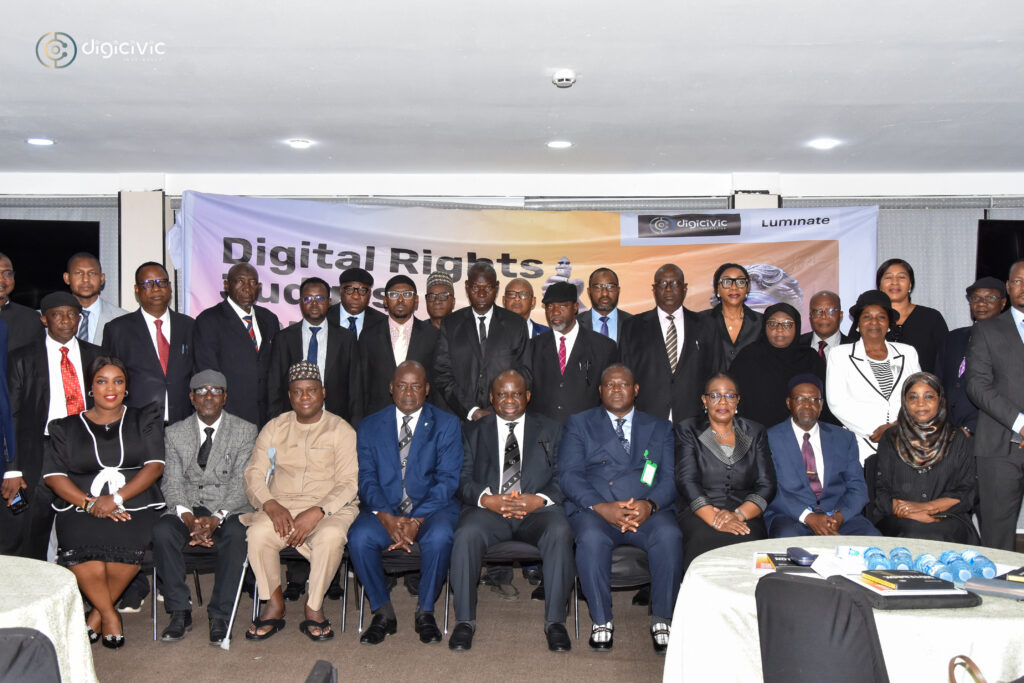
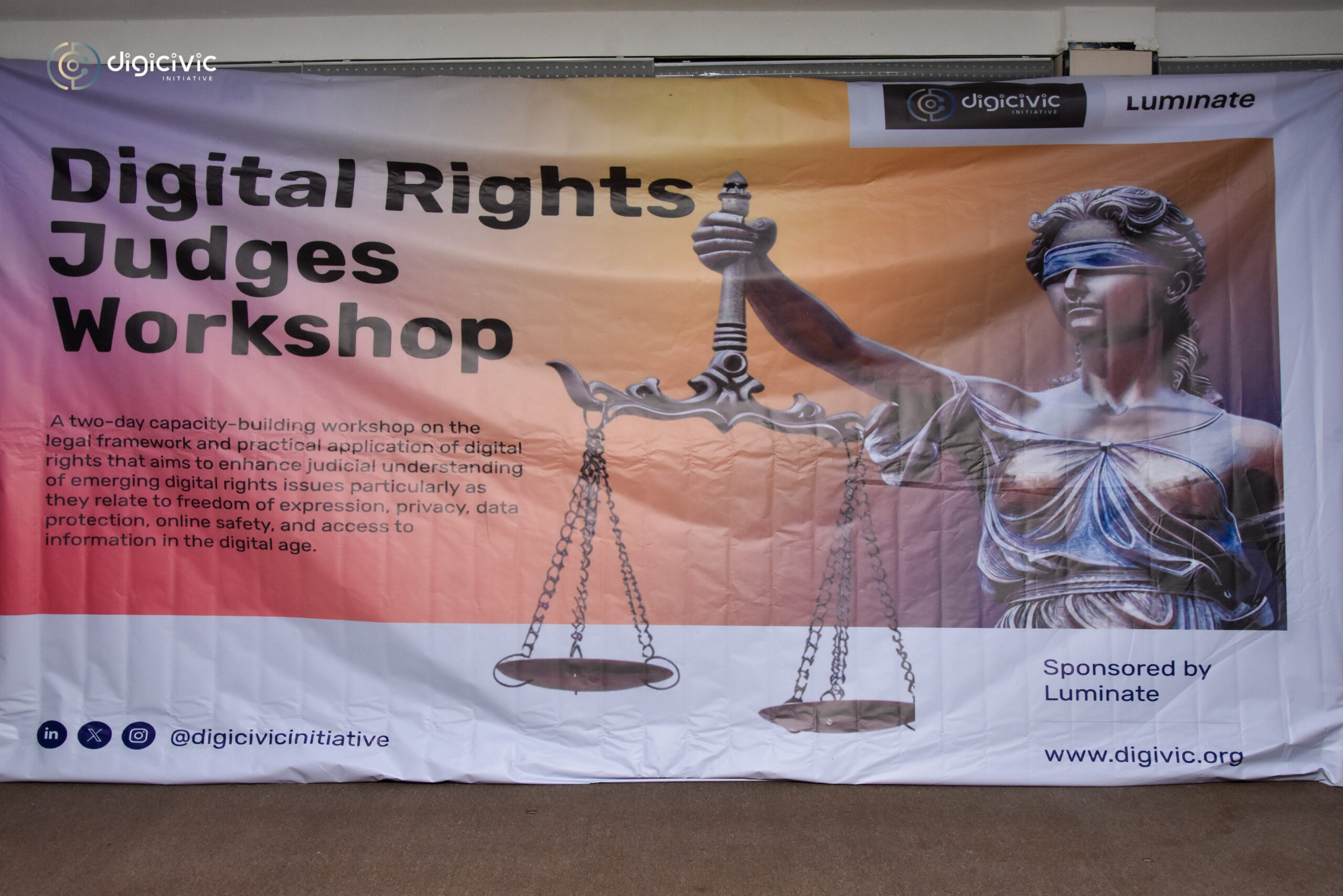
Recognising the growing need for judicial expertise in digital rights, DigiCivic Initiative, in collaboration with the National Judicial Institute (NJI) and the National Human Rights Commission (NHRC), with support from Luminate, convened the Digital Rights Judges Workshop in Abuja from 12–13 May 2026.
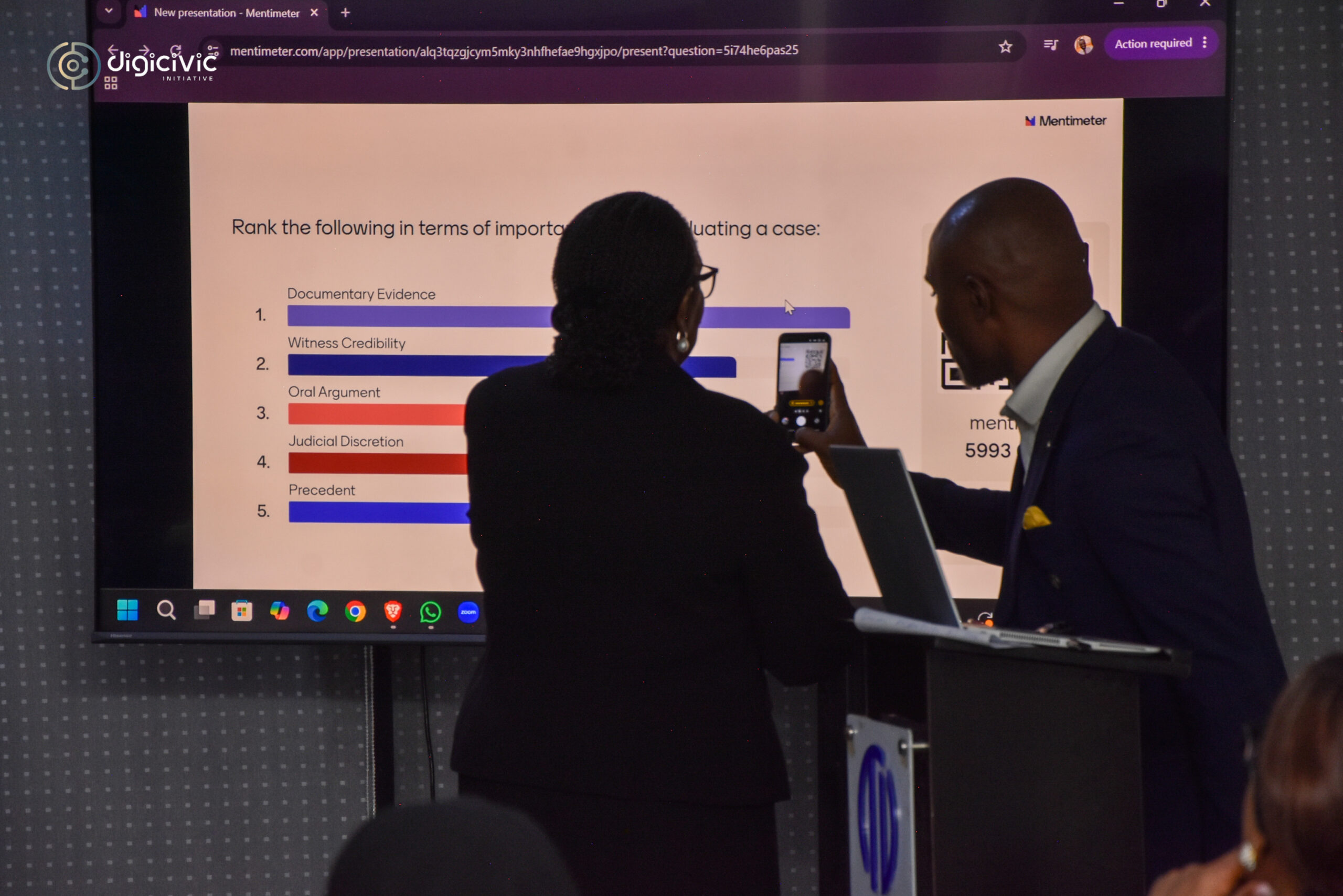
The two-day capacity-building programme brought together 28 judicial officers from the Federal High Court, National Industrial Court, and State High Courts across Nigeria’s Northern Zone. More than a training programme, the workshop created a space for judges to examine how technology is changing the administration of justice and what this means for protecting fundamental rights in an increasingly connected world.
Throughout the workshop, participants explored a central question: How can the judiciary continue to uphold justice when technology is changing faster than the legal questions it creates?
Key Themes Explored
Every Click Leaves a Trace
The workshop opened with a reminder that digital footprints rarely disappear. Browsing histories, metadata, location information, and other digital traces can reveal far more than many users realise. A common misconception challenged during the session was the belief that incognito mode or VPNs guarantee anonymity—participants learned that these tools only mask activity from certain parties while still leaving identifiable digital records.
Judges examined how email records, online activity, and even seemingly anonymous digital behaviour can leave traces that may later become relevant in judicial proceedings. As one facilitator noted, true anonymity online is far more difficult to achieve than most people assume.
Applying Existing Law to Digital Rights
Discussions focused on Nigeria’s constitutional protections alongside regional and international instruments. The workshop examined how established legal principles—including the Three-Part Test for determining whether restrictions on fundamental rights are lawful, necessary, and proportionate—apply to digital issues such as online expression, internet restrictions, and access to information.
A key insight emerged: many digital disputes are not entirely new legal problems. Rather, they require existing legal principles to be interpreted and applied within new technological contexts.
When Seeing Is No Longer Believing
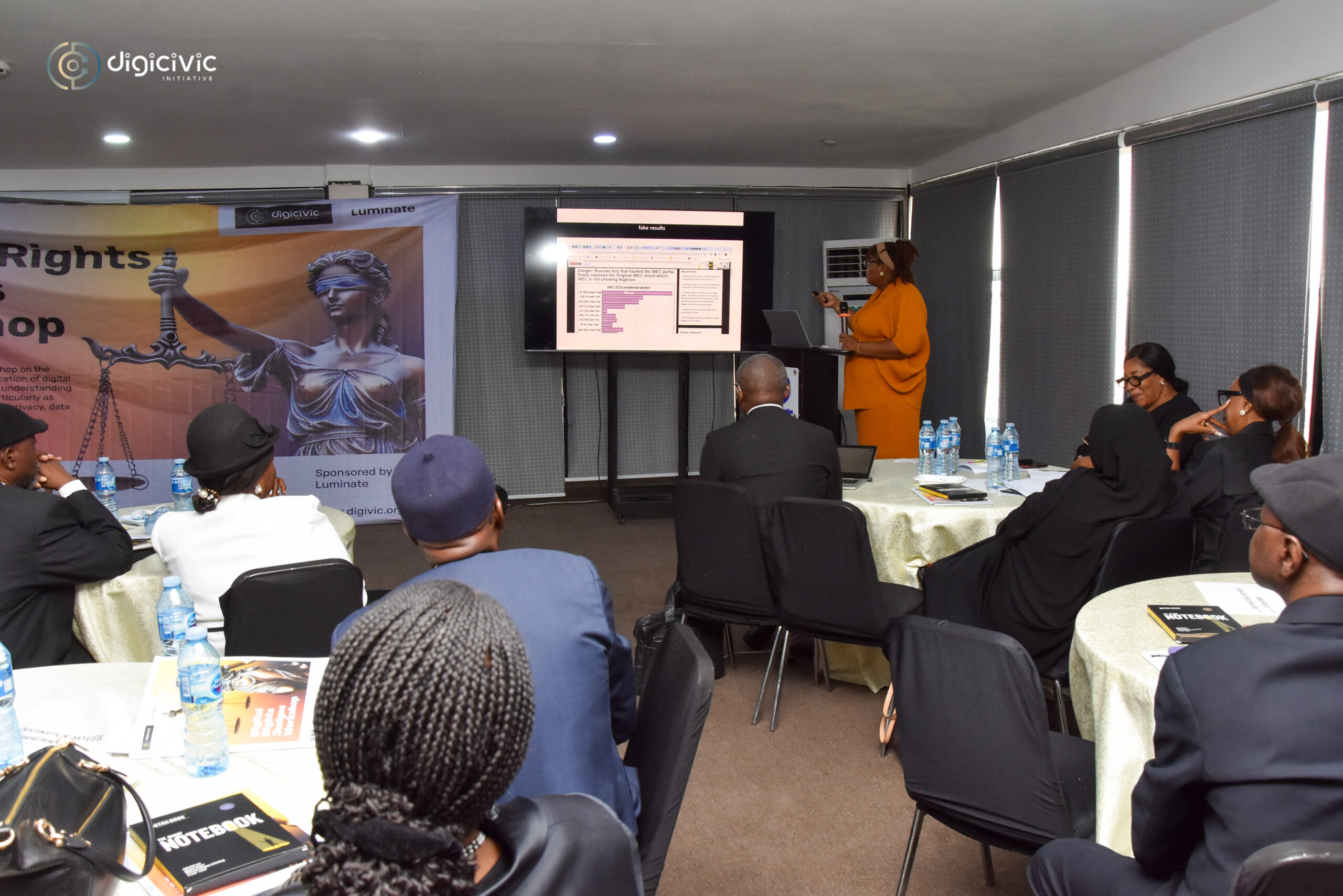
Artificial Intelligence has introduced one of the most significant challenges facing courts today. During the session on AI and digital evidence, participants explored how AI-generated images, videos, and audio recordings are changing traditional approaches to authenticity.
The concept of the “liar’s dividend”, where genuine evidence can be dismissed simply by claiming it was generated using artificial intelligence generated considerable discussion. This growing challenge forces courts to look beyond appearance alone. The question is no longer whether technology can fabricate evidence, but how authenticity can be established when doubt itself becomes a legal strategy.
The facilitator emphasised that AI detection tools should serve only as probability indicators, not conclusive proof. The judiciary was encouraged to adopt a balanced and informed approach by understanding AI capabilities, strengthening authentication standards, and relying on corroborative evidence.
Protecting Privacy in a Data-Driven World
The workshop explored the practical application of the Nigeria Data Protection Act (NDPA) , discussing whether clicking “I Agree” always amounts to meaningful consent, what remedies exist when personal data is exposed, and how courts should approach disputes involving surveillance and biometrics.
The session examined the core principles of data processing—lawfulness, fairness, transparency, purpose limitation, data minimisation, and accountability—and considered how these principles apply in judicial contexts.
Online Harm Has Offline Consequences
The workshop examined Online Gender-Based Violence (OGBV) and its profound emotional, psychological, and social consequences. Participants explored legal remedies within existing Nigerian laws, including the Violence Against Persons (VAPP) Act, and discussed the critical challenge of preserving digital evidence.
The discussion reinforced that online abuse is not separate from real-world harm. The emotional, psychological, and reputational consequences often extend far beyond the screen, making effective legal protection and timely evidence preservation increasingly important.
Key Resolutions
Following intensive discussions across six sessions, participants adopted the following resolutions:
- Recognition of Digital Rights: Digital rights are extensions of fundamental human rights and must be protected within the digital environment.
- Legislative and Policy Reform: Legal frameworks on digital evidence, cybercrime, and privacy should be reviewed and updated to align with evolving technological realities.
- Judicial Capacity Building: Sustained training on AI, cybercrime, and emerging technologies is urgently needed to strengthen judicial competence.
- AI and Digital Evidence: Stricter authentication standards and corroborative evidence approaches must be developed for evaluating AI-related evidence.
- Digitalisation of the Judiciary: Court systems should be modernised through electronic case management and virtual hearings to improve efficiency and access to justice.
- Secured Platforms for the Judiciary: Privacy-protected technological platforms are needed to safeguard judicial information from unauthorised access.
A Collaborative Partnership
The success of the workshop reflected a shared commitment to preparing Nigeria’s judiciary for an increasingly digital future. Through the collaboration of DigiCivic Initiative, the National Judicial Institute, and the National Human Rights Commission, judicial officers were able to engage directly with emerging digital rights challenges in a practical learning environment.
The workshop was made possible through the support of Luminate, whose global mission supports open, accountable, and rights-respecting societies by strengthening civic empowerment, public participation, and access to justice. By supporting initiatives that strengthen judicial understanding of digital rights, Luminate is helping build institutions that are better equipped to respond to emerging technology, protect fundamental rights, and improve access to justice.
Looking Ahead
The resolutions adopted at the Abuja workshop represent more than a list of recommendations; they signal a collective recognition that Nigeria’s judiciary must evolve alongside the digital landscape it is being asked to govern. From strengthening authentication standards for AI-generated evidence to developing secure platforms for judicial information, these commitments lay a foundation for sustained institutional reform.
By investing in judicial capacity today, the National Judicial Institute, the National Human Rights Commission, DigiCivic Initiative, and Luminate are helping ensure that Nigeria’s courts remain equipped to protect rights, uphold justice, and maintain public confidence in the digital age.