
Admin
- February 13, 2026
Written by Faith Ashearen Ayuba
INTRODUCTION
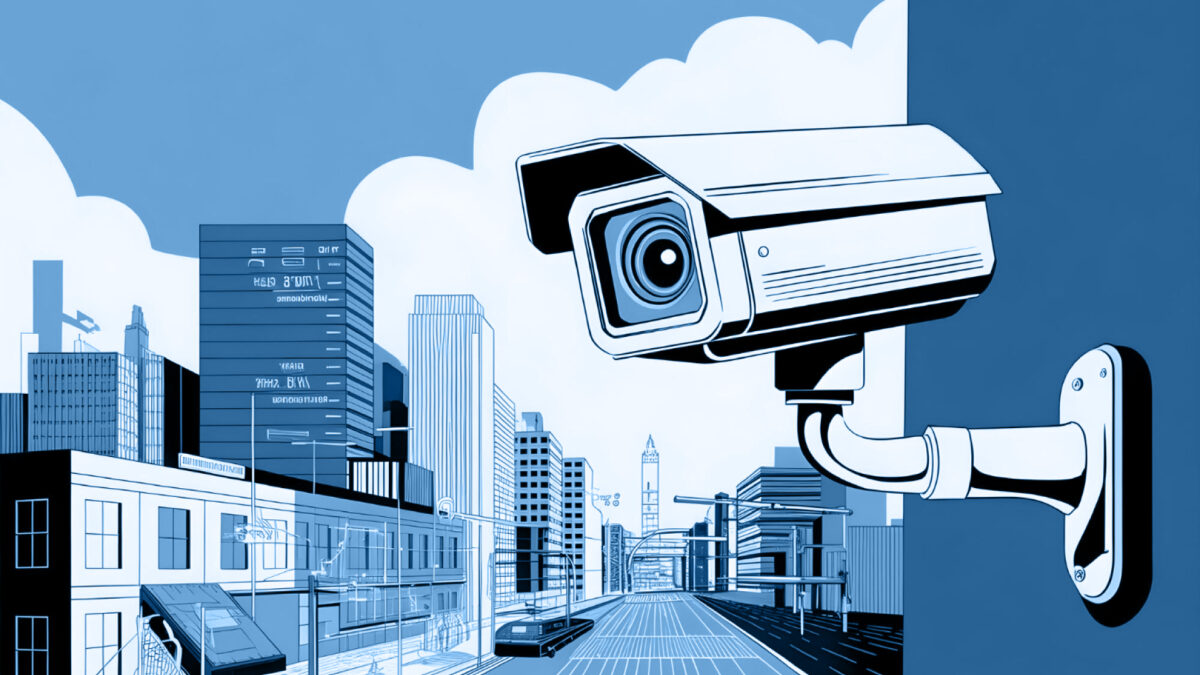
We’ve established that digital rights are essential to protecting civic space in the digital age. One of the significant threats to these rights today is digital surveillance.
Surveillance technologies are often justified in the name of national security, public safety or crime prevention. However, when deployed without transparency, oversight or legal safeguards, surveillance can become a powerful tool for restricting civic participation and silencing dissent.
Understanding how digital surveillance affects civic space is critical to defending democratic freedoms.
WHAT IS DIGITAL SURVEILLANCE?
Digital surveillance can broadly be defined as the systematic monitoring, collection and analysis of data on individuals , groups or activities often without the consent or knowledge of those being monitored. Digital surveillance involves governments and other non-state actors using technologies like AI, facial recognition and spyware to monitor, intimidate and suppress activists, journalists and ordinary citizens, chilling free expression, assembly and association, and undermining democracy by eroding privacy, creating fear and enabling control.
While states justify it as preserving national security, it often undermines fundamental rights with significant impacts seen in countries like Nigeria where online activism is vital but faces increasing digital repression. According to the United Nations, surveillance practices must meet strict standards of legality, necessity and proportionality to be compatible with human rights obligations.
HOW SURVEILLANCE AFFECTS CIVIC SPACE
Civic space thrives on freedom–freedom to speak, organise and challenge authority. However, unlawful and excessive surveillance can infringe on this freedom in subtle but profound ways.
- Chilling effect on expression: when activists, journalists and human rights defenders fear being monitored, they are less likely to organise online, share dissenting views or engage in advocacy.
- Weaponisation against civil society: governments have used spyware and digital surveillance tools to monitor opposition leaders, journalists and CSOs. Such surveillance tools utilized for monitoring can expose networks, strategies and identities therefore putting individuals at risk of harassment, arrest or intimidation.
- Erosion of privacy and trust: facial recognition databases, SIM card registration systems and biometric ID programs can be repurposed for political profiling or targeting minority voices. Constant monitoring by States and tech companies undermine trust in institutions and online spaces.
- Normalization of control: when surveillance becomes normalized citizens may begin to accept reduced privacy as inevitable. Over time, public resistance to rights violation is eroded democratic accountability is rendered useless. The UN Office of the High Commissioner for Human Rights (OHCHR), noted that surveillance can shift the balance of power between state and citizens.
- Suppression of dissent: restrictions on encryption undermine secure communication channels essential for whistleblowers, investigative journalists, human rights defenders and Civic movements. Tools track activists, leading to detention, harassment and censorship.
THE EXPANSION OF SURVEILLANCE IN THE DIGITAL AGE: WHY?
Several factors have contributed to the rapid growth of digital surveillance:
- Increased reliance on digital platforms for communication.
- Advances in data analytics and artificial intelligence.
- Inadequate or outdated protection laws.
- Limited transparency around government procurement of surveillance tools.
In many contexts, surveillance technologies are adopted faster than laws and safeguards can keep up.
LEGAL FRAMEWORKS ENABLING DIGITAL SURVEILLANCE IN NIGERIA
Lawful Interception of Communication Regulation 2019: The LICR 2019 obliges telecom and Internet service providers to build systems that allow government interception of communication. These include calls, SMS, emails and other digital messages. Providers are also obligated to assist in decrypting encrypted communication upon request. This effectively establishes technical access points (“back doors”) for state surveillance. This regulation has the following effect;
- Encryption protections are weakened.
- Expansion of the technical reach of state monitoring beyond limited criminal cases to routine data flows.
This regulation represents the most direct legal framework of governing digital surveillance in Nigeria. It has significantly expanded state surveillance power by allowing interception of communications for broadly defined purposes such as national security, public safety and economic well-being. It also permits interception in “urgent” situations before a court order is obtained, with judicial approval sought retrospectively. It is also worthy of note that no provision is given to clarify the situations that are to be considered as “urgent” situations. Service providers are required to assist in decryption and data access. Law enforcement agencies are allowed to intercept and retain data for extended periods with limited independent verification of deletion and minimization.
While the LICR 2019 has been framed as a lawful framework, it has raised concerns on issues relating to its weak safeguards, vague thresholds and limited independent oversight, as well as concerns about compatibility with section 37 of the 1999 Constitution which guarantees the right to privacy.
The Cybercrimes (Prohibition, Prevention, etc.) Act, 2015: The Act empowers law enforcement agencies to request Subscriber information, traffic data and content data for the investigation of cyber related offences. Although judicial authorisation is contemplated, concerns persist about broad discretion, weak safeguards and routine access to Communication data.
Nigeria Data Protection Regulation and Nigerian Data Protection Act 2023: This data protection framework establishes obligations for lawful processing personal data and recognises privacy as a fundamental right. However, exceptions for National security and law enforcement, coupled with weak enforcement against state actors, limits its effectiveness as a safeguard against surveillance abuse. It is worthy of note also that the LICR was made pursuant to provisions of the NDPA.
HUMAN RIGHTS REQUIREMENTS FOR SURVEILLANCE
International human rights laws do not prohibit surveillance outright, but it sets clear conditions. Surveillance measures must;
- Be provided for by law.
- Serve a legitimate aim.
- Be strictly necessary.
- Be proportionate.
- Be subject to independent oversights and remedies.
Without these safeguards, surveillance risks violating rights to privacy, expression and association.
THE ROLE OF CIVIL SOCIETY
Civil society organizations (CSOs) play a crucial role in resisting harmful surveillance practices. CSOs employ a range of activities to counter surveillance including legal action and policy advocacy, technical capacity building and training, and investigation and public awareness campaigns.
- Legal action and policy advocacy: CSOs actively work to reform laws and hold governments accountable for surveillance abuses.
- Strategic litigation: initiating public interest lawsuits to challenge the legality of mass surveillance laws, unlawful internet shutdowns, and the misuse of data.
- Policy engagement: engaging in national, regional and international advocacy to push for stringent data protection frameworks and human rights-aligned surveillance laws.
- Campaigns and moratoriums: launching public campaigns such as the European wide “Reclaim Your Face” initiative against biometric mass surveillance.
- Legislative pushes: drafting model legislation, meeting with lawmakers, lobbying for laws that ban specific surveillance techniques and ensure robust independent oversight mechanisms are established.
- Technical capacity building and training: CSOs focus on enhancing the digital resilience of activists and other vulnerable groups through digital security training, promoting secure tools and providing support (legal, financial and digital assistance).
- Investigation and public awareness: CSOs play a crucial role in exposing the extent and impact of digital surveillance to the public. They investigate, document and report instances of data and privacy breaches and unlawful surveillance. They also advocate for mandatory transparency, pushing government and companies to publish regular reports on data requests, inform users of data collection practices and disclose surveillance technologies used.
CSOs organize public meetings and work with communities to raise awareness about mass surveillance and its implication for human rights and democratic freedoms, fostering a shared understanding of the risks.
WHERE DIGICIVIC STANDS!
At DigiCivic we believe that security must never come at the expense of fundamental freedoms we are committed to fighting and advocating for;
- Transparent surveillance laws.
- Strong data protection frameworks.
- Independence oversight mechanisms.
- Protection for journalists, activists, Civic actors and the general public.
Digital technologies should strengthen trust between government and citizens and not undermine it.
CONCLUSION
Governments excuse surveillance on the premise of national security, crime and terrorism. Civil society argues for strong legal frameworks, transparency and accountability to protect fundamental rights. Surveillance when unchecked, transforms digital spaces from platforms of participation into tools of control. Protecting privacy is not about hiding wrongdoing–it is about preserving the freedom to participate fully in public Life. Defending the Civic space requires vigilance, accountability and a firm commitment to human rights.
Learn more about your digital rights, support advocacy for stronger safeguards and join us in working toward a future where technology serves people and democracy.
Sources:
- DigiCivic: Digital rights toolkit for legal professionals,civil society actors, grassroots advocates,and the general public.https://digicivic.org/digital-rights-toolkit-by-digicivi
- UN Office of the High Commissioner for Human Rights:The Right to Privacy in the Digital Age https://share.google/AsD8ByuVOokA2zTyt
- European Digital Rights (EDRi): Surveillance and Civic Space https://share.google/d7W3rxCEBCetXgfws
- CIVICUS Monitor: Tactics of Repression https://monitor.civicus.org/globalfindings/TacticsOfRepression/
- Access Now Submission: OHCHR Right to Privacy in the Digital Age https://www.ohchr.org/sites/default/files/documents/cfi-subm/privacy-digital-age/subm-privacy-digital-age-cso-17-access-now.pdf
Surveillance/Spyware: An Impediment to Civil Society, HRDs and Journalists in East & Southern Africa https://www.unwantedwitness.org/wp-content/uploads/2025/06/Report-06.06.2025-FINAL.pdf
Access our digital rights toolkit:https://digicivic.org/digital-rights-toolkit-by-digicivic/